
How Natural Sleep Support Works
Understanding Circadian Rhythm, Stress, Brain Recovery, and Deep Sleep Restoration
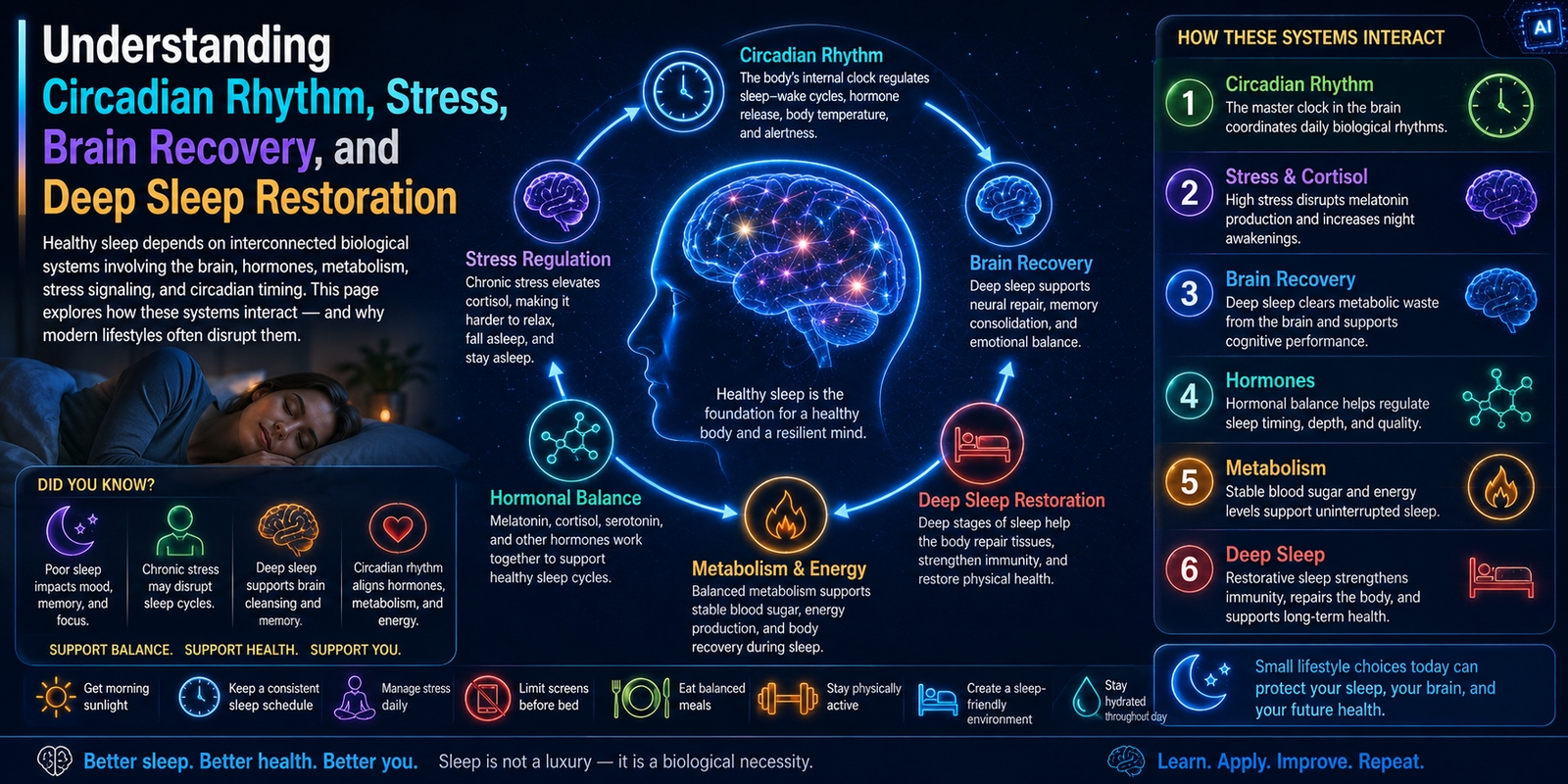
Healthy sleep is regulated by an interconnected network of biological systems rather than a single process. The brain coordinates circadian rhythms, while hormones such as melatonin and cortisol help determine when we feel alert or ready for rest. Stress, metabolism, and nervous system activity also influence sleep quality, brain recovery, and overall well-being. During deep sleep, the brain consolidates memories, supports cellular repair, clears metabolic waste, and promotes emotional resilience. Modern lifestyles—including irregular schedules, excessive screen exposure, chronic stress, and poor sleep habits—can disrupt these natural processes, reducing restorative sleep and daytime performance. Understanding how circadian timing, stress regulation, hormonal balance, and metabolism work together highlights why healthy sleep depends on consistent daily habits. Small lifestyle improvements may help support deeper sleep, healthier brain function, greater energy, and long-term physical and cognitive wellness.
The Circadian Rhythm System
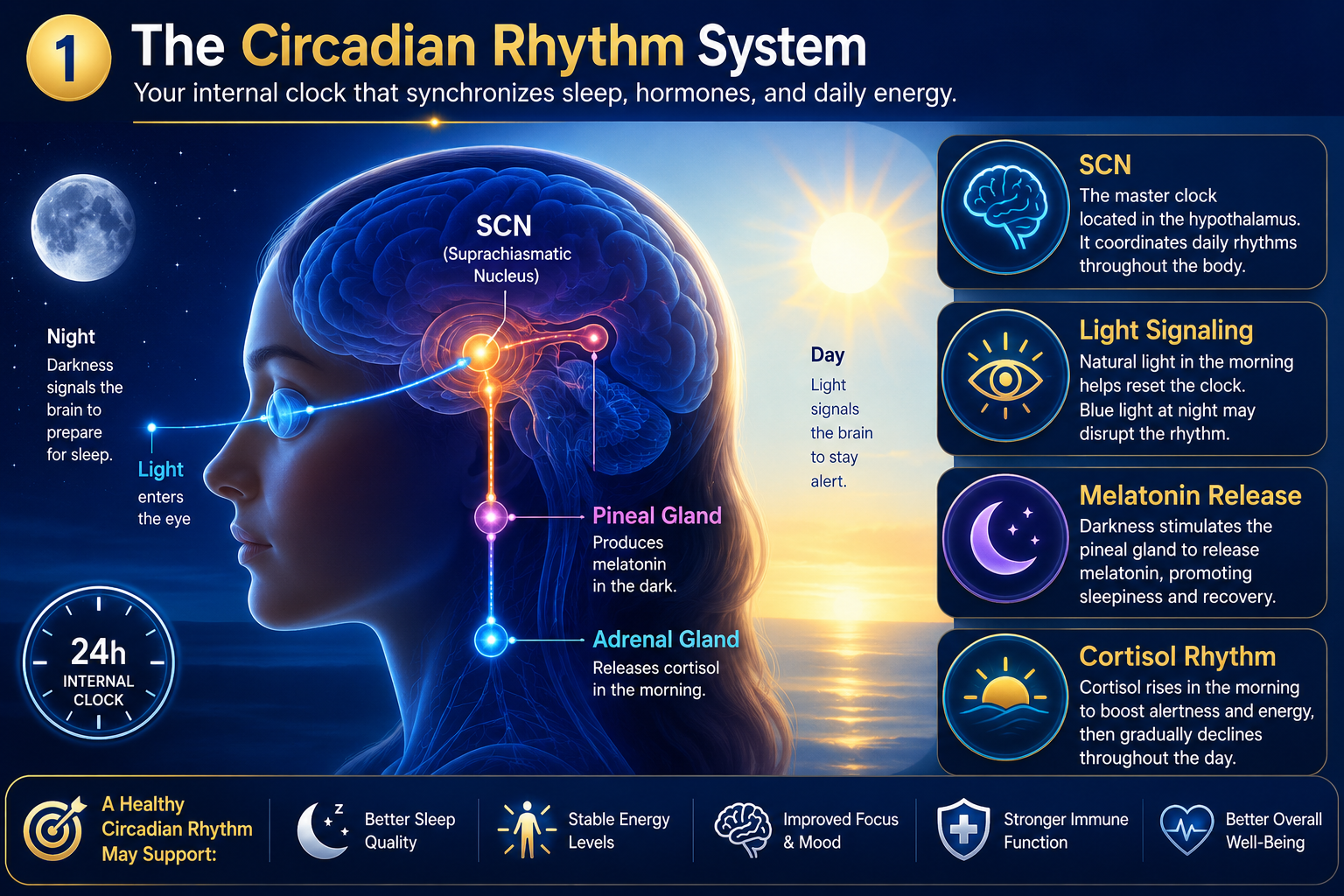
The circadian rhythm system is the body’s internal 24-hour timing network that helps coordinate sleep, hormone release, metabolism, body temperature, and daily energy levels. At its center is the suprachiasmatic nucleus (SCN), a small region in the hypothalamus that functions as the body’s master biological clock. Light detected by the eyes provides signals that synchronize the SCN with the natural day–night cycle. During darkness, the SCN promotes melatonin release from the pineal gland, supporting sleep onset and nighttime recovery. As morning light appears, melatonin production declines while cortisol levels naturally rise, promoting alertness and daytime activity. Maintaining a healthy circadian rhythm through consistent sleep schedules and regular light exposure may support cognitive performance, metabolic health, immune function, and overall well-being.
- SCN (suprachiasmatic nucleus)
- Light signaling
- Melatonin release
- Cortisol rhythm
The Stress–Sleep Connection

- Cortisol
- Adrenal activation
- Sympathetic nervous
- Hypervigilance
- Anxiety and sleep interruption
Brain Recovery During Sleep
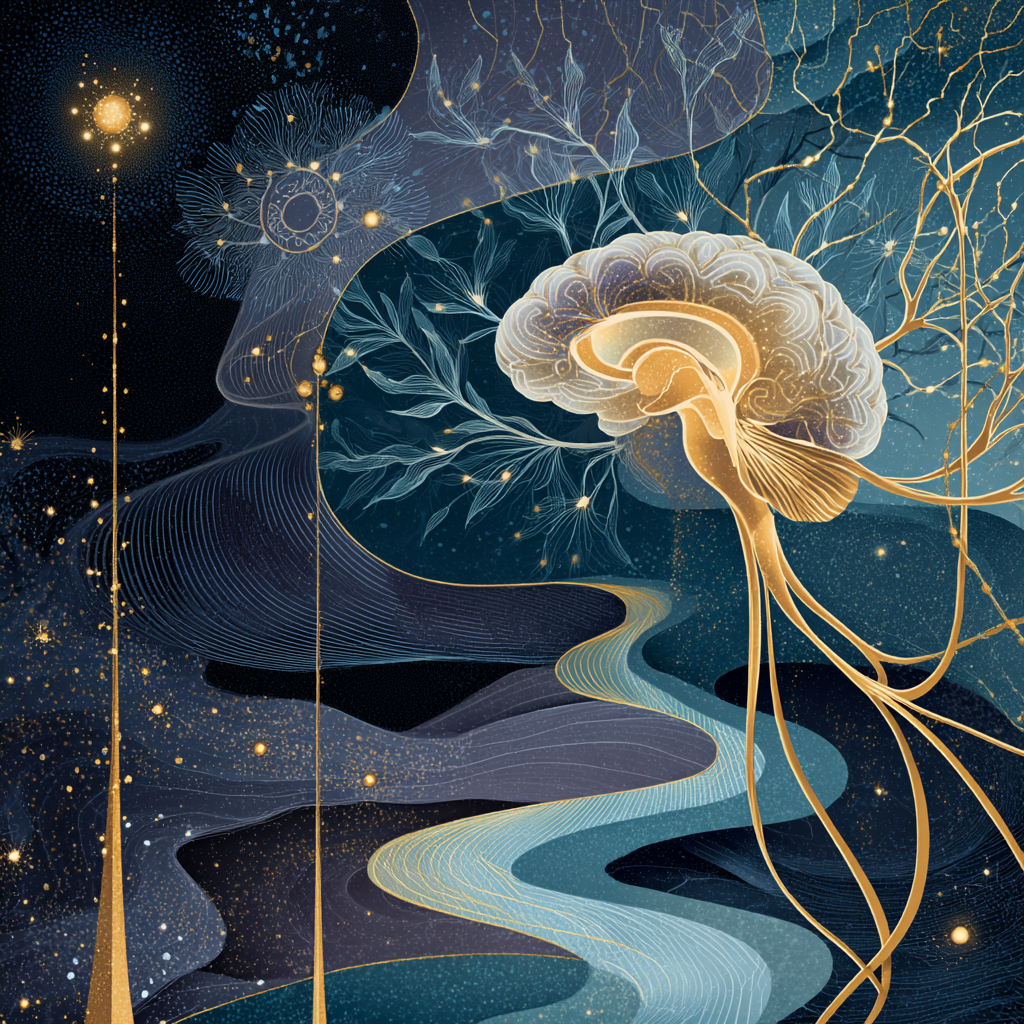
- Glymphatic system
- Memory consolidation
- Neurotransmitter regulation
- Brain detoxification
Blood Sugar and Sleep Stability
- Nocturnal glucose fluctuations
- Insulin
- Hunger hormones
- Cortisol spikes
Common Natural Sleep Support Ingredients

- Magnesium
- L-theanine
- Melatonin
- Glycine
- Herbal ingredients
- Adaptogens
Why Systems-Based Sleep Restoration Matters
- Sleep is not isolated
- Brain + hormones + metabolism
- Long-term recovery
- Lifestyle integration
Compare formulated sleep aids

- ingredient quality
- formulation logic
- scientific rationale
- overall sleep support strategies.
Your Guide to Better Sleep and Recovery
Quality sleep is one of the most important foundations of long-term health, yet it is also one of the most misunderstood. Sleep is not simply a period of rest—it is an active biological process during which the brain organizes memories, the body repairs tissues, hormones are regulated, and countless cellular maintenance processes take place. Modern lifestyles, however, often interfere with these natural cycles. Irregular schedules, chronic stress, excessive evening screen exposure, poor nutrition, and limited physical activity may all contribute to disrupted sleep and reduced daytime performance.
This educational page explores the science behind healthy sleep using a systems-based perspective. Rather than focusing on a single ingredient or quick solution, it examines how circadian rhythm, stress regulation, brain recovery, metabolism, nervous system balance, and healthy daily habits work together to support restorative sleep. You will also learn about common sleep-support ingredients, evidence-informed lifestyle strategies, and practical considerations when evaluating supplements or wellness routines. Understanding these interconnected biological systems can help you make more informed decisions while maintaining realistic expectations. Healthy sleep is usually the result of consistent habits, supportive environments, and balanced physiology—not a single product. Building these foundations may contribute to better recovery, improved cognitive performance, emotional well-being, and overall long-term wellness.
Discover evidence-informed articles explaining sleep biology, circadian rhythm, stress, brain recovery, lifestyle strategies, and sleep-support supplements. Learn how healthy habits and scientifically grounded approaches may work together to promote more restorative sleep and long-term wellness.